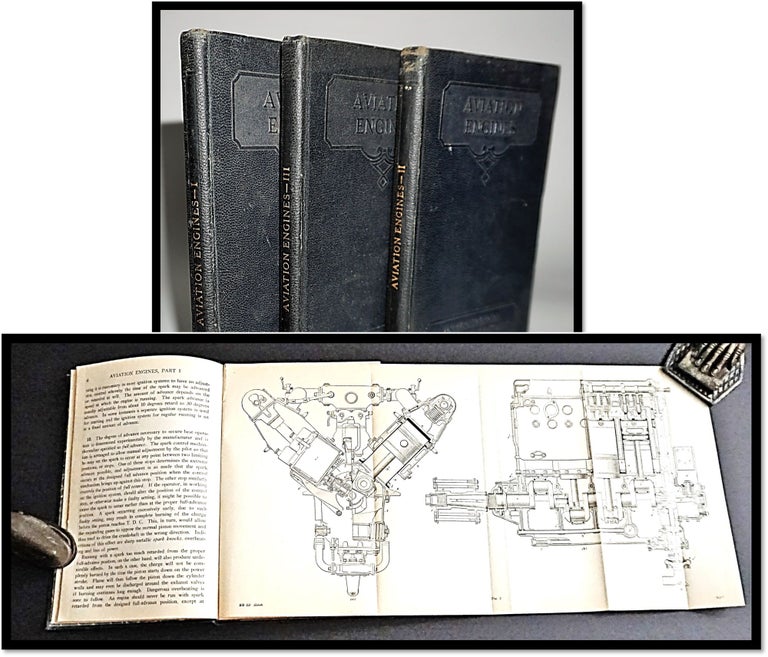
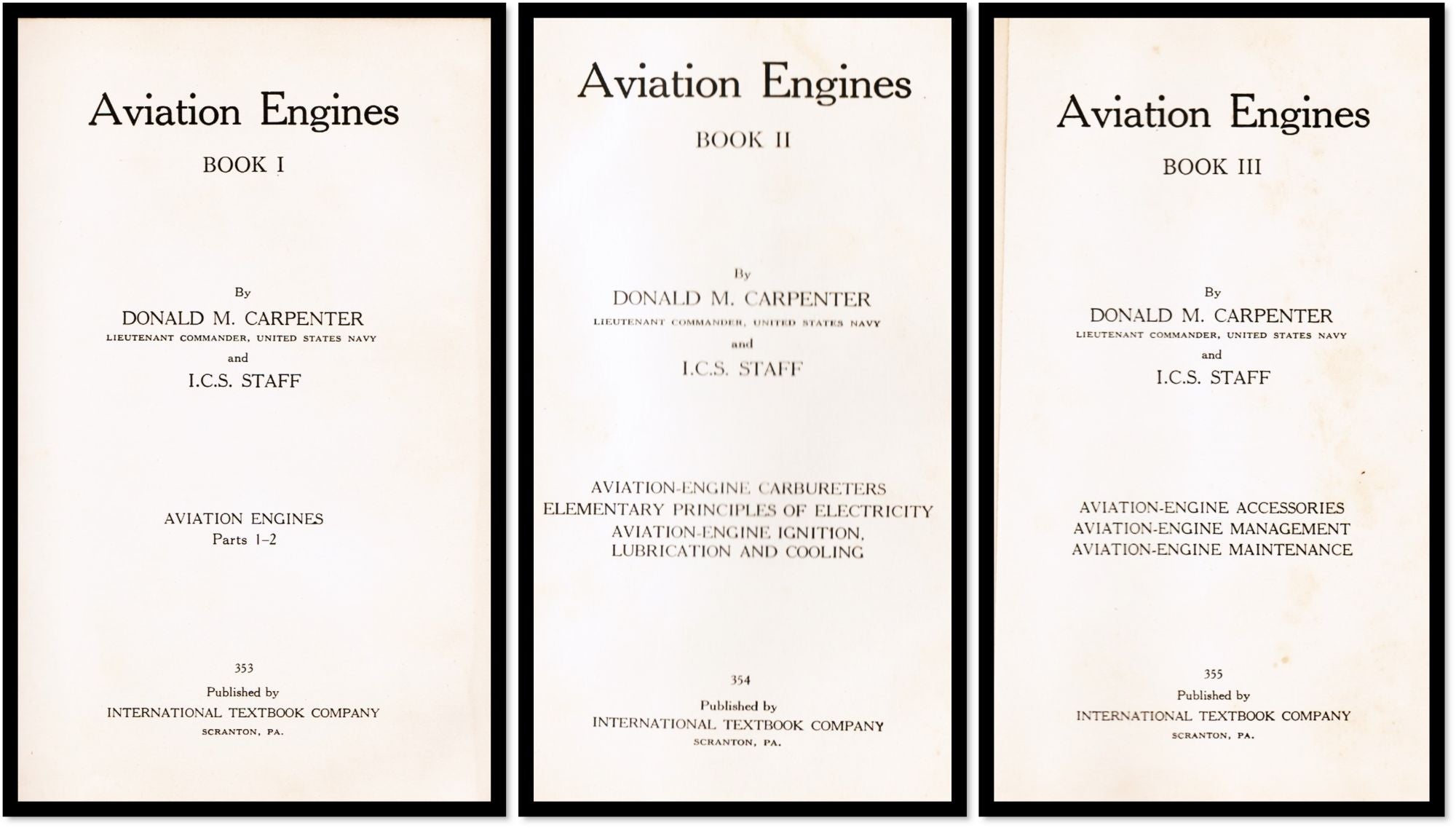

Aviation Engines (3 Volumes, Complete)
Scranton, PA: International Textbook Company. 1929.
A Comprehensive And Technically Dense Record Of Aviation Propulsion At The Dawn Of The Golden Age Of Flight.
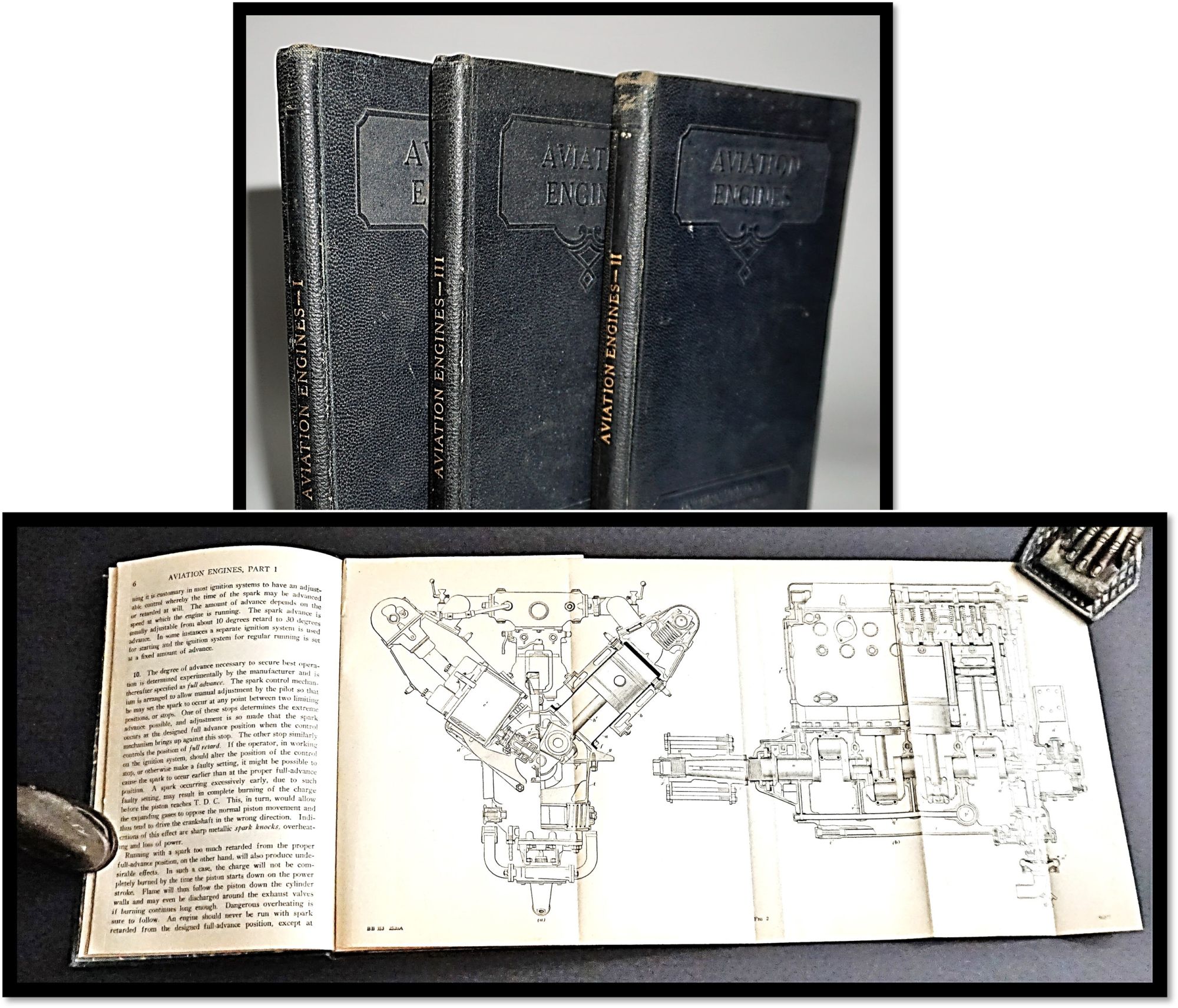
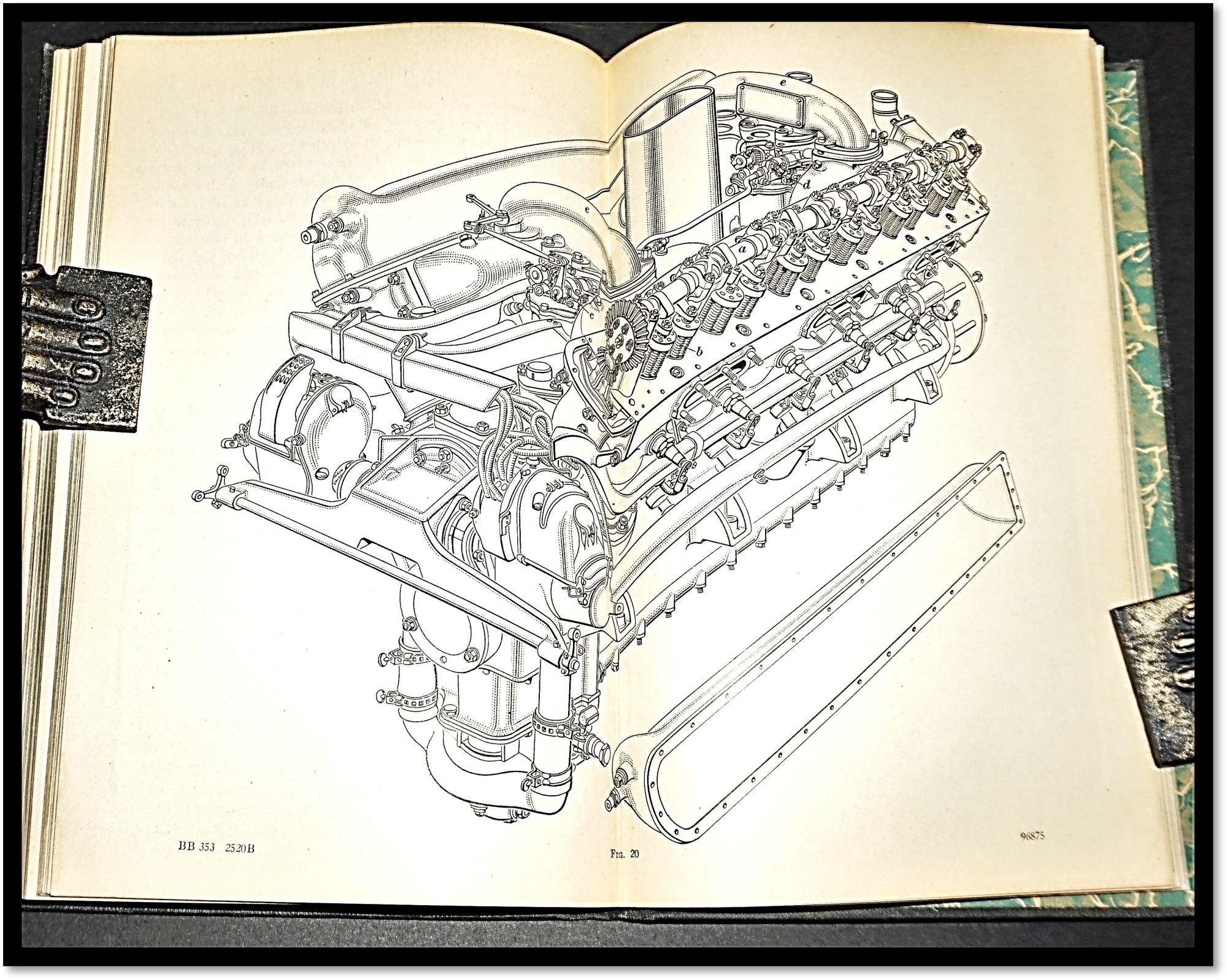
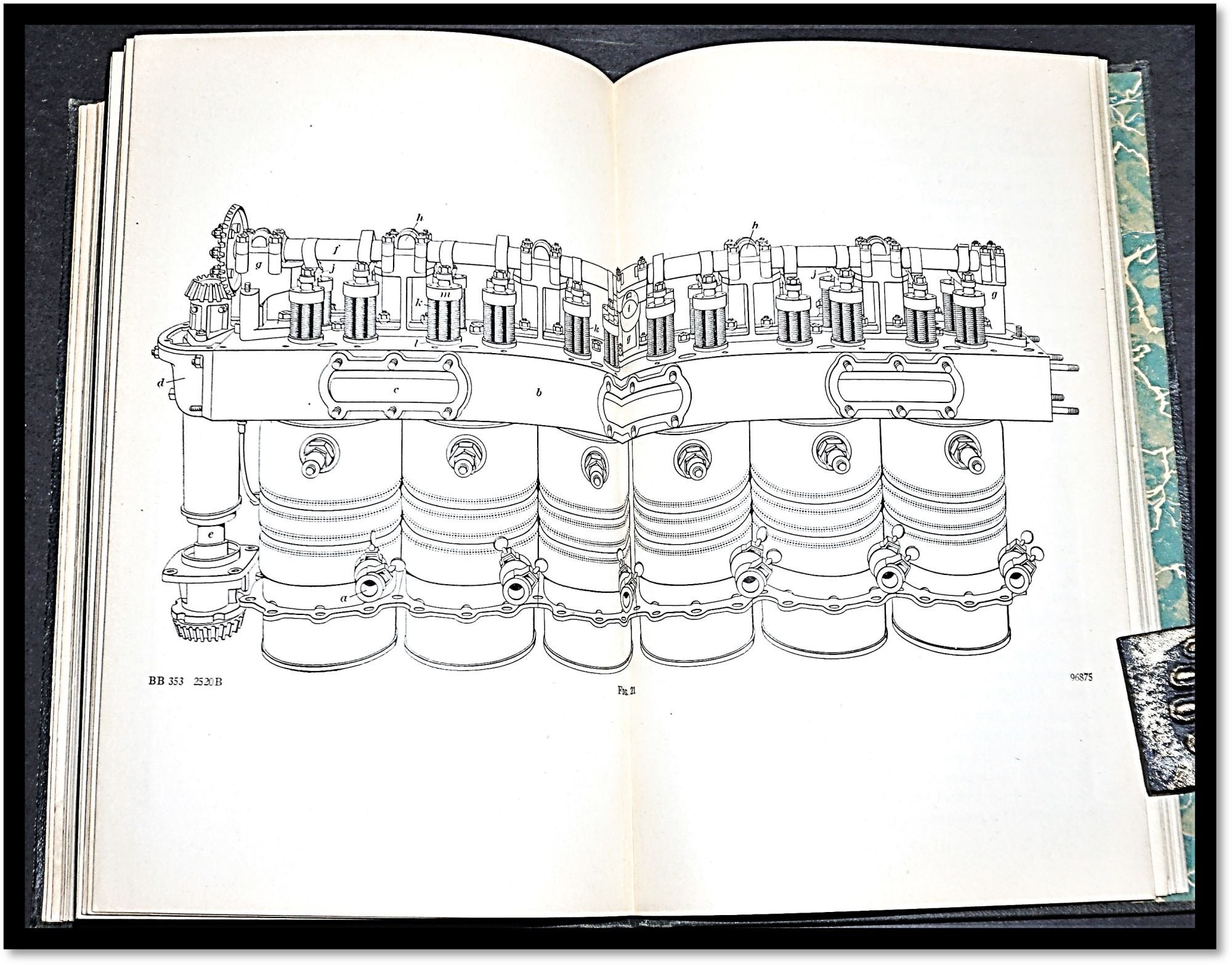
Published just two years after Lindbergh's crossing, this three-volume set provides a meticulous engineering overview of engine mechanics, ignition systems, and maintenance protocols used by the U.S. Navy and commercial sectors. The work is defined by its high-fidelity technical drawings and fold-out schematics, serving as a primary instructional artifact for the generation of mechanics who powered the interwar aviation boom.
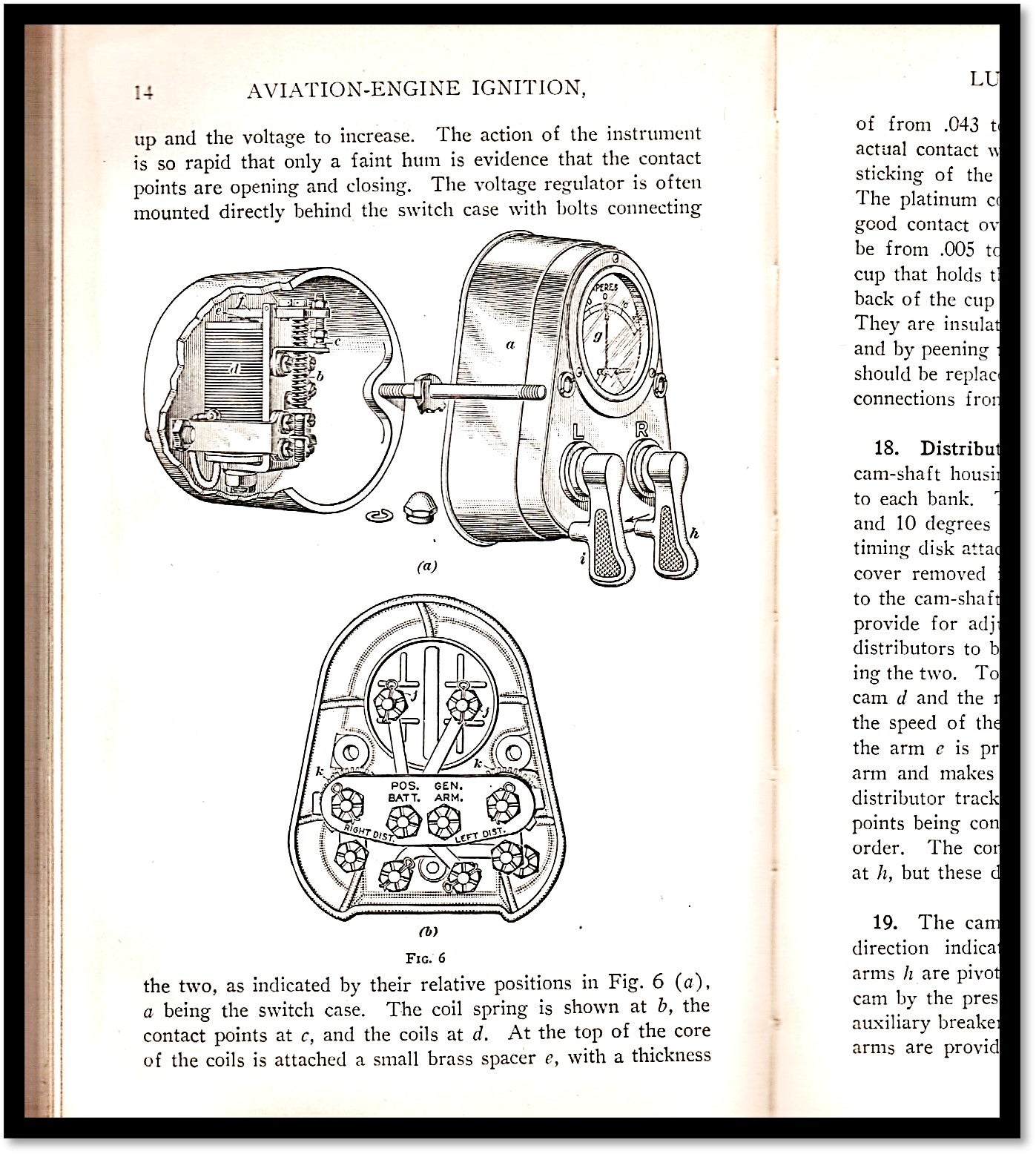
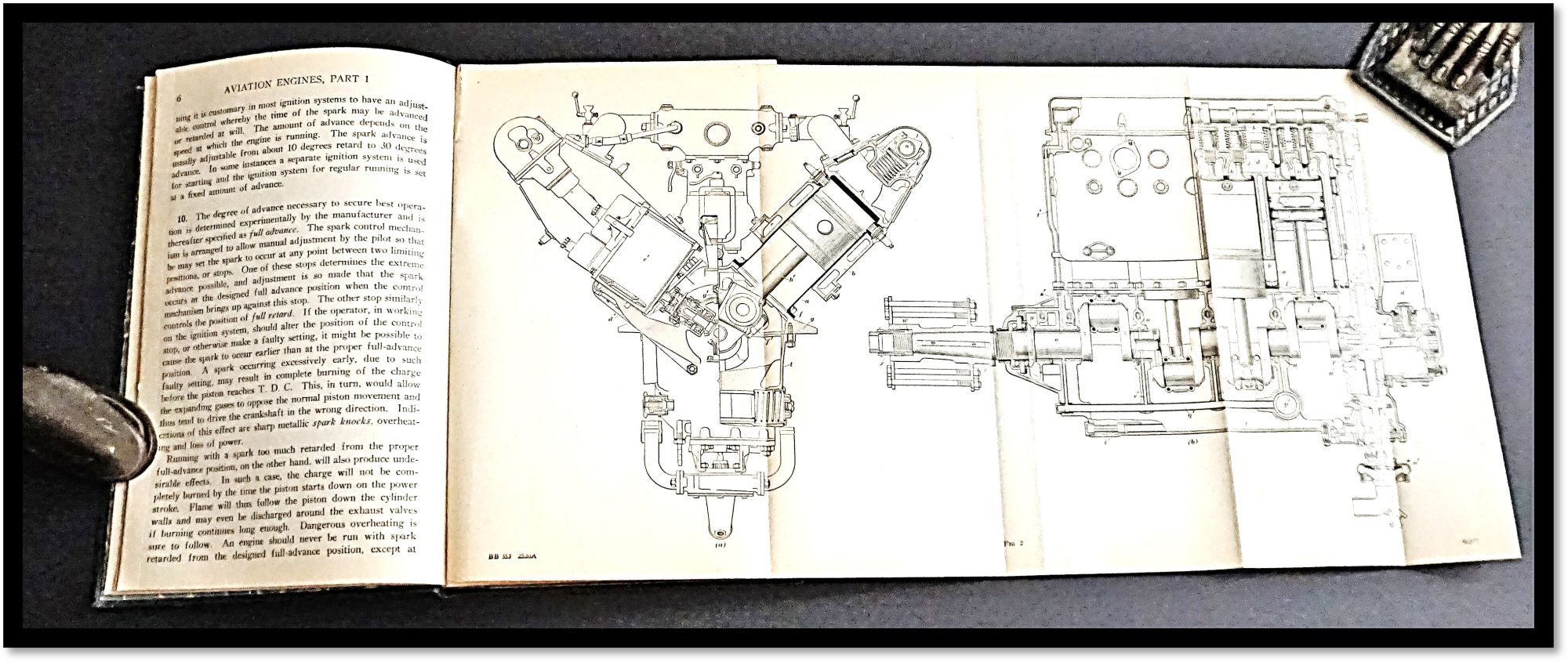
PHYSICAL FEATURES: Stiff black leatherette with blind-stamped titles on front covers and gilt-stamped titles on the spines. Featuring marble endpages in all volumes. Extensively illustrated throughout with intricate line drawings, engineering charts, and technical diagrams. Includes two large fold-out charts in Volume I detailing engine cross-sections. 7.5 inches tall. Each volume contains two distinct parts with individual pagination.
CONDITION: Very Good. The bindings are tight and square, showing moderate shelf handling wear and light rubbing to the extremities. The internal text blocks are clean with light, even age-toning throughout. Volume II contains two horizontally torn pages in the center which have been stabilized with old tape repairs; otherwise, the set is free of significant internal markings or structural failure.
HISTORICAL SIGNIFICANCE —
Donald M. Carpenter’s collaboration with the I.C.S. represents a pivotal moment in the democratization of technical aviation knowledge. While high-level engineering was restricted to elite universities, the International Textbook Company provided accessible, military-grade instruction to the growing workforce of ground crews and civilian pilots during the 1920s.
The year 1929 was the zenith of aviation speculation and technological pride before the Great Depression. This set documents the specific mechanical standards that enabled long-distance flight and the nascent air-mail service, including the elementary principles of electricity that were beginning to revolutionize cockpit instrumentation.
As a complete three-volume set, it survives as a vital primary document for the history of technology, specifically reflecting the U.S. Navy’s rigorous standards for engine ignition and cooling—systems that would be tested and refined leading into the Second World War.
SCHOLARLY FEATURES
+++ Technical Scope:
Volume I: Aviation Engines, Parts 1-2 (Core mechanical theory).
Volume II: Carburetors, Electricity, Ignition, Lubrication, and Cooling.
Volume III: Accessories, Management, and Maintenance.
+++ Historical Impact: Captures the state of 'cutting-edge' naval aviation technology in 1929, documenting the transition from primitive WWI-era powerplants to more sophisticated, reliable interwar radial and inline engines.
+++ Design: The diagrams serve as a high-water mark for pedagogical technical art, designed for clarity in high-stakes military and industrial environments.
SUBJECTS: Aviation History, Aeronautical Engineering, Military Technology, US Navy, 1920s Ephemera, Internal Combustion Engines, Technical Manual, Reference Work, Americana.
Item #16916
Price: $65.00
Other books you may like